
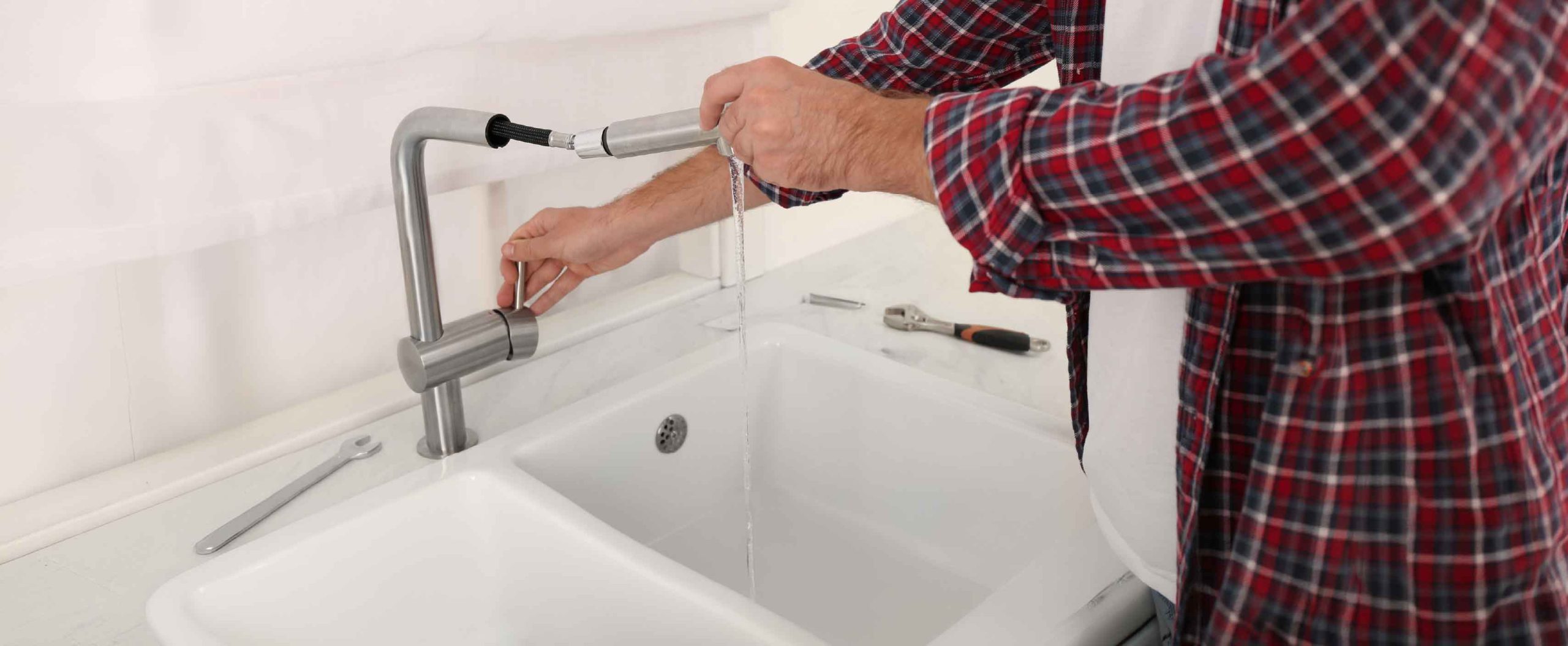
A dripping kitchen faucet might seem like a small annoyance, but it can waste a surprising amount of water and drive up your utility bills over time. In fact, even a slow drip can add up to thousands of gallons of wasted water each year.
The good news is that many common faucet leaks are caused by minor issues that can be fixed quickly. Here are five simple fixes that can help you stop the drip and get your kitchen back to normal.
Start by Identifying Your Faucet Type
Before you grab any tools, it helps to know what kind of faucet you’re working with. Most homes have one of these:
- Compression faucets
- Ball faucets
- Cartridge faucets
- Ceramic disk faucets
Each type works a little differently, but most leaks come down to worn parts or buildup inside the fixture.
1. Replace a Worn O-Ring
If you notice water pooling around the base of the faucet or near the handle, a worn O-ring is often the cause. These small rubber rings create a seal inside the faucet, and over time they can crack or loosen.
Replacing an O-ring is usually a quick fix:
- Turn off the water supply
- Remove the handle and stem
- Swap out the old ring for a new one
- Reassemble the faucet
It’s a small part, but it can make a big difference.
2. Replace the Washer
If your faucet drips from the spout, especially in a two-handle setup, a worn washer is often to blame. Washers press against the valve seat to stop water flow, and repeated use causes them to wear down.
Replacing the washer is straightforward and inexpensive, and it often solves the problem right away.
3. Clean a Clogged Aerator
Sometimes the issue isn’t a leak at all, but restricted water flow that causes splashing or uneven pressure. That’s often due to a clogged aerator, the small screen at the tip of your faucet.
To fix it:
- Unscrew the aerator
- Soak it in vinegar to break down mineral buildup
- Scrub and rinse before reinstalling
This simple step can restore smooth water flow and prevent future issues.
4. Replace the Cartridge
If you have a single-handle faucet and it’s still leaking, the cartridge inside may be worn out. This component controls water flow and temperature, and once it fails, leaks are common.
Replacing a cartridge usually involves removing the handle, pulling out the old unit, and installing a matching replacement. Just make sure you use the correct part for your faucet model.
5. Repair or Replace the Valve Seat
The valve seat connects the faucet to the spout, and over time it can corrode or collect mineral deposits. When that happens, leaks can develop around the spout area.
Cleaning or replacing the valve seat can fix the issue and extend the life of your faucet, although this repair can be a bit more involved.
When It’s Time to Call a Professional
While many faucet issues are simple to fix, some problems go beyond a quick repair. If you’re dealing with ongoing leaks, corrosion, or damaged components, it’s best to call in a professional.
Leaks that aren’t addressed can lead to higher water bills, fixture damage, and even mold or cabinet deterioration over time.
Stop the Drip for Good
A leaky kitchen faucet isn’t just annoying. It’s costing you money every day. The sooner you fix it, the better.
If you’ve tried these fixes and the leak won’t stop, the team at Mr. Rooter is here to help. We’ll find the source of the problem, fix it properly, and make sure your plumbing is working the way it should.
Book your service today and put an end to that drip for good.